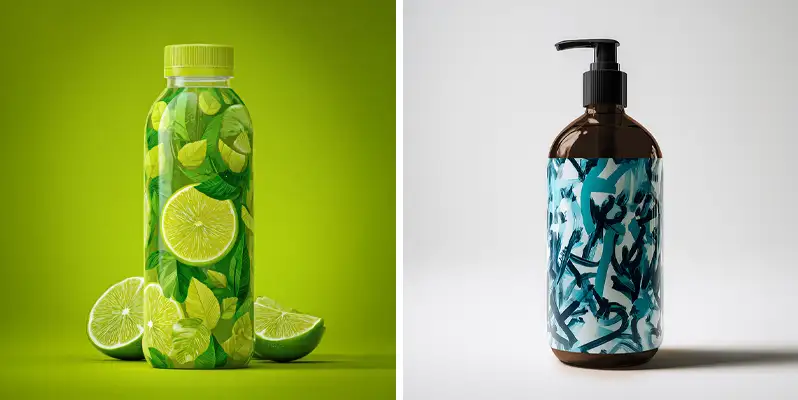
In modern packaging, full-body decoration plays a critical role in both branding and functionality. Among the most striking forms of packaging decoration are full-body decorative heat-shrink sleeves and full-body labels. While both cover the entire container surface, they differ significantly in performance, design flexibility, and brand impact.
Full-Body Heat-Shrink Sleeves
Overview
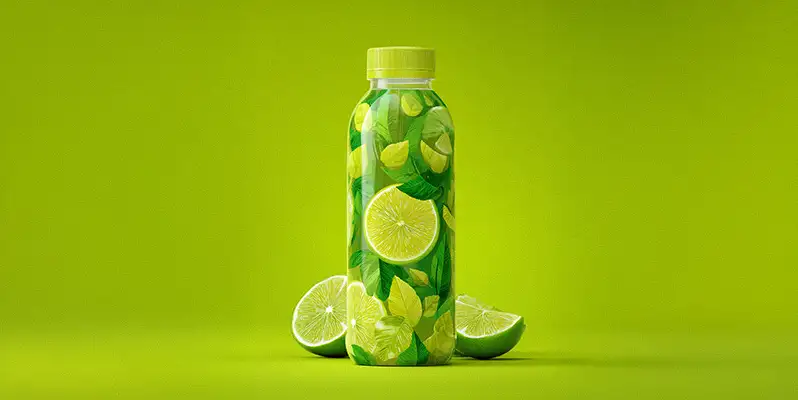
Shrink sleeves are printed films (commonly PET, RPET, or PLA) that are applied over a container and then exposed to controlled heat, conforming tightly to its shape.
| Advantages | Limitations |
|---|---|
| Conformability: Sleeves adapt to virtually any container geometry, from cylindrical bottles to contoured or asymmetrical designs. This is particularly useful in markets like beverages and cosmetics where distinctive shapes are common. | Heat Application Required: Shrinking requires steam tunnels or heat guns, adding energy use to production. |
| 360° Decoration: Printing across the entire sleeve allows uninterrupted branding, barcodes, and regulatory information without compromising design. | Film Thickness & Cost: Shrink films are generally thicker than label stock, leading to slightly higher material usage. |
| Integrated Security: A sleeve can extend over closures, providing inherent tamper evidence without additional seals. | Recycling Considerations: Improperly designed sleeves can interfere with container recycling if not easily separated. However, when material parity is achieved—such as applying a PET shrink sleeve to a PET bottle—this challenge is greatly reduced. In these cases, the sleeve and container share the same polymer family, allowing for streamlined recycling without the need for separation. This alignment is a significant advancement toward circular packaging and sustainability goals. |
| Surface Protection: The sleeve acts as a barrier against scuffs, maintaining container appearance throughout distribution. | |
| Technical Flexibility: Special films enable features such as matte/gloss contrasts, metallic inks, or even thermochromic and photochromic effects. |
Full-Body Labels
Overview
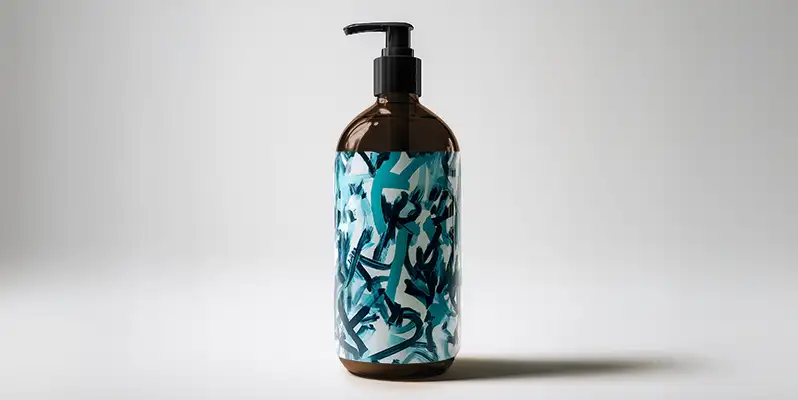
Full-wrap labels (pressure-sensitive, roll-fed, or cut-and-stack) are printed substrates—paper or film—wrapped around a container’s circumference and adhered with glue or pressure.
| Advantages | Limitations |
|---|---|
| Cost Efficiency: Labels are usually thinner and lighter, requiring less material and lower energy for application. | Limited Conformability: Labels cannot adapt to unusual container shapes—creases, bubbles, or overlaps are common on curved surfaces. |
| Simplified Equipment: Applicators are relatively straightforward, with no heat-tunnel infrastructure required. | Design Constraints: Artwork is restricted by seams and by the practical limits of wraparound adhesion. Achieving premium finishes or full 360° decoration is more challenging. |
| Recycling Alignment: Paper labels, or easily releasable film labels, are often compatible with standard recycling processes. Although the adhesive on the labels might cause them to not conform to recycling requirements. | Security: Labels do not inherently provide tamper evidence, necessitating additional packaging components. Often with labels and neck labels they scuff and break easily before arriving with the consumer, appearing as if someone has tampered with the product—leading to a lack of trust in the brand and product. |
| Surface Protection: The sleeve acts as a barrier against scuffs, maintaining container appearance throughout distribution. | Reduced Shelf Impact: Flat labels may look less premium, especially on premium beverages, cosmetics, or confectionery products. |
| Technical Flexibility: Special films enable features such as matte/gloss contrasts, metallic inks, or even thermochromic and photochromic effects. |
Where Full-Body Shrink Sleeves Hold the Edge
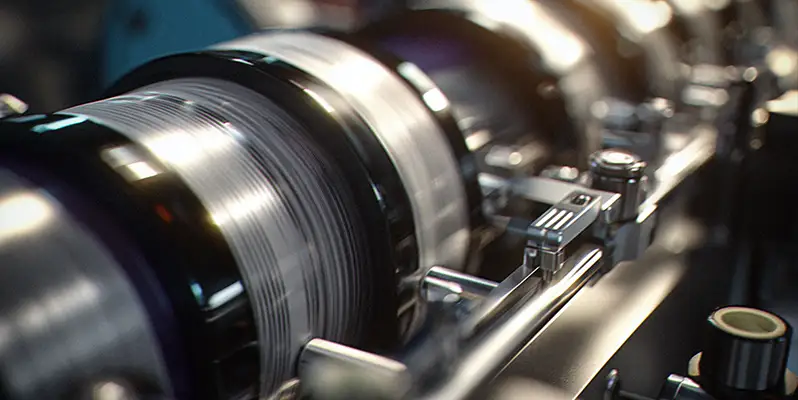
While both solutions are viable, shrink sleeves offer more flexibility and design freedom, particularly as container shapes and branding requirements become more sophisticated. Technical advances—such as recyclable PET sleeves, perforated tear-off bands, and downgauged films—are addressing traditional concerns around cost and sustainability. The growing use of same-material (PET-on-PET) shrink systems further enhances recyclability, helping brands meet both aesthetic and environmental targets.
Full-body labels retain their relevance in high-volume, cost-sensitive applications on simple container forms, but sleeves increasingly dominate markets where brand differentiation, irregular shapes, or tamper evidence are priorities. For standard cylindrical packaging, full-body labels remain efficient and economical. But where packaging must work harder—protecting, differentiating, and enhancing consumer trust—heat-shrink sleeves present the technically superior solution.

 Free Callback
 Contact Us